How to read a LinkedIn agency case study before you buy
Six questions that turn a polished case study into something you can actually judge, and the gaps worth asking about on the first call.

A case study is a sales document. That is fine; it is also the best evidence most agencies can show you before you sign. The trick is to read it the way a careful buyer reads a reference: for what it proves, what it implies, and what it leaves out.
These six questions take about ten minutes per case study and will shape a much better first call.
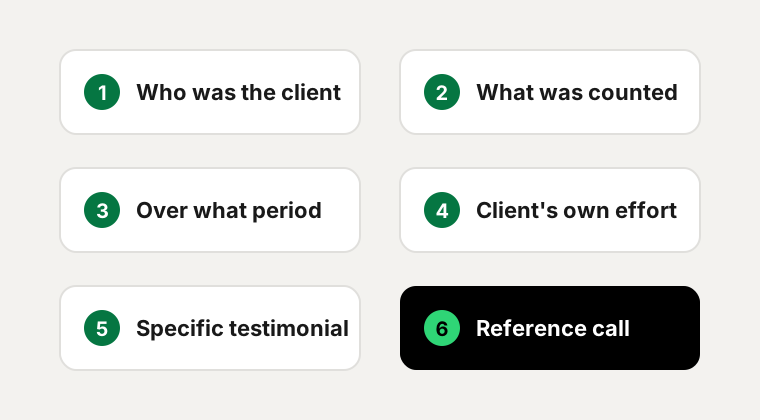
1. Who was the client, really?Link to this section
Look for the company size, the market and the buyer the campaign targeted. A result for a 20-person developer tools company selling to engineering leads tells you little about selling payroll software to finance directors.
If the client is anonymous, that is common and often reasonable. Ask the agency to describe the client in enough detail that you can judge whether the situation matches yours.
2. What exactly was counted?Link to this section
“Meetings”, “leads” and “opportunities” mean different things at different agencies. Before you compare numbers, pin down the definition.
| Word in the case study | Question to ask |
|---|---|
| Lead | Is this a reply, a positive reply, or a qualified prospect? |
| Meeting | Was it held, or only booked? Who qualified it? |
| Pipeline | Who created the opportunity, and at what stage? |
A small number with a strict definition is often worth more than a large number with a loose one.
3. Over what period?Link to this section
A strong month inside a slow year reads very differently from steady results across two quarters. Ask for the start date, the end date and whether the engagement is still running. Ongoing clients are a better signal than finished ones.
4. What did the client have to do?Link to this section
Outbound only works when someone on the client side takes the meetings, follows up and closes. A good case study names that work. If it does not, ask:
- How many hours a week did the client spend?
- Who approved messaging and content?
- What happened to the meetings after they were booked?
5. Is the testimonial specific?Link to this section
Generic praise (“great team, highly recommend”) is pleasant and tells you almost nothing. Specific praise names a person, a role, a change and a timeframe. Advertising rules in many markets expect endorsements to reflect the endorser’s honest experience and not to imply results that are unusual for typical customers[1]. A careful agency writes case studies with that in mind.
If a case study shows only the best result, ask what a typical result looks like.
6. Can you speak to the client?Link to this section
The strongest step is a short reference call. Not every client agrees, and that is normal. Ask anyway; how the agency responds is informative in itself.
What to bring to the first callLink to this section
Write down the two or three gaps you found and ask about them directly. You are not trying to catch anyone out. You are trying to learn whether the way this agency works matches the way your team works.
A short scriptLink to this section
“I read the case study on the analytics company. Can you tell me how you counted meetings there, how long the engagement ran, and what the client’s team did each week?”
That one question usually tells you more than the whole page.