The LinkedIn-to-Sales Handoff Checklist for B2B SaaS
A practical checklist for passing LinkedIn conversations to sales, with separate definitions for booked, held, qualified and opportunity-stage outcomes.

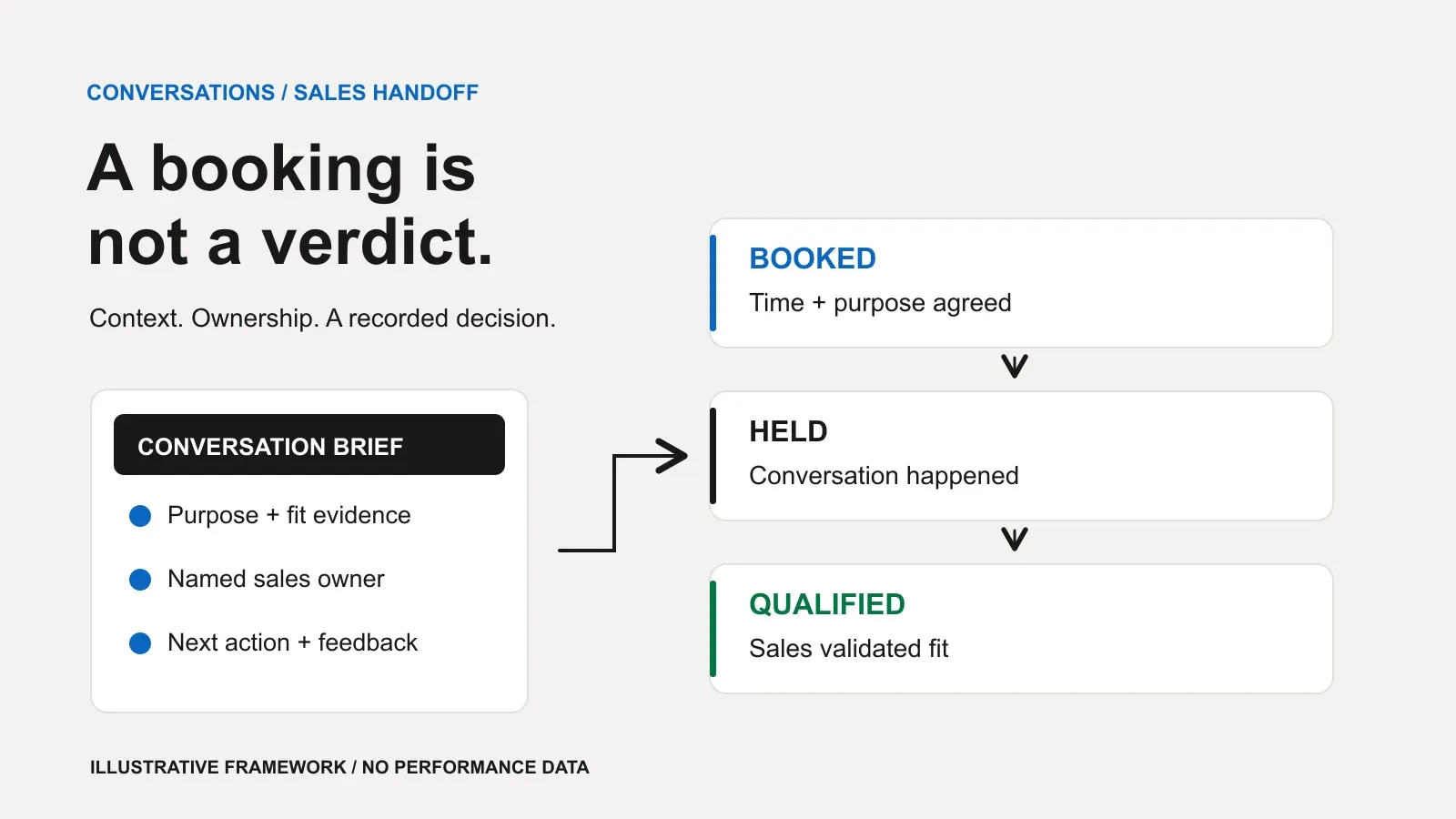
A useful LinkedIn lead handoff checklist tells sales why the person agreed to speak, what is known about fit, what remains unknown, and who owns the next action. A calendar invitation is part of that handoff, not proof that the prospect is qualified.
We recommend a shared conversation brief, a named sales owner and separate outcome fields. The checklist below is our operating framework, not a CRM vendor’s prescribed process or a claim about Sapps results. Adapt the qualification criteria to your product and buying process before outreach begins.
Separate booked, held, qualified and opportunityLink to this section
Use these working definitions in the agency brief and reporting agreement:
- Booked: the prospect agreed to a purpose and time, and the meeting is on the intended sales owner’s calendar.
- Held: the prospect and sales representative attended and had the intended conversation. An internal preparation call does not count.
- Qualified: the sales team confirmed the agreed fit and buying-context criteria, with evidence and remaining gaps recorded.
- Opportunity: sales created or linked a deal record under your opportunity-entry rules. Record its owner and next step separately.
These are different dimensions, not interchangeable labels. In HubSpot’s default lifecycle, sales-qualified means sales judged a person or company to be a potential customer; opportunity identifies involvement with a deal. Neither definition is simply a booking[1].
HubSpot also documents meeting outcome separately from lifecycle stage, with properties for completed, canceled, no-show and rescheduled outcomes. It warns that meeting integrations may use their own properties rather than the default ones[2]. Check the actual mapping in your setup.
Salesforce describes qualifying a lead before conversion to a contact and an account. An opportunity can be created when the potential deal warrants it[3]. HubSpot and Salesforce are examples of record structures, not endorsements or instructions to copy every default.
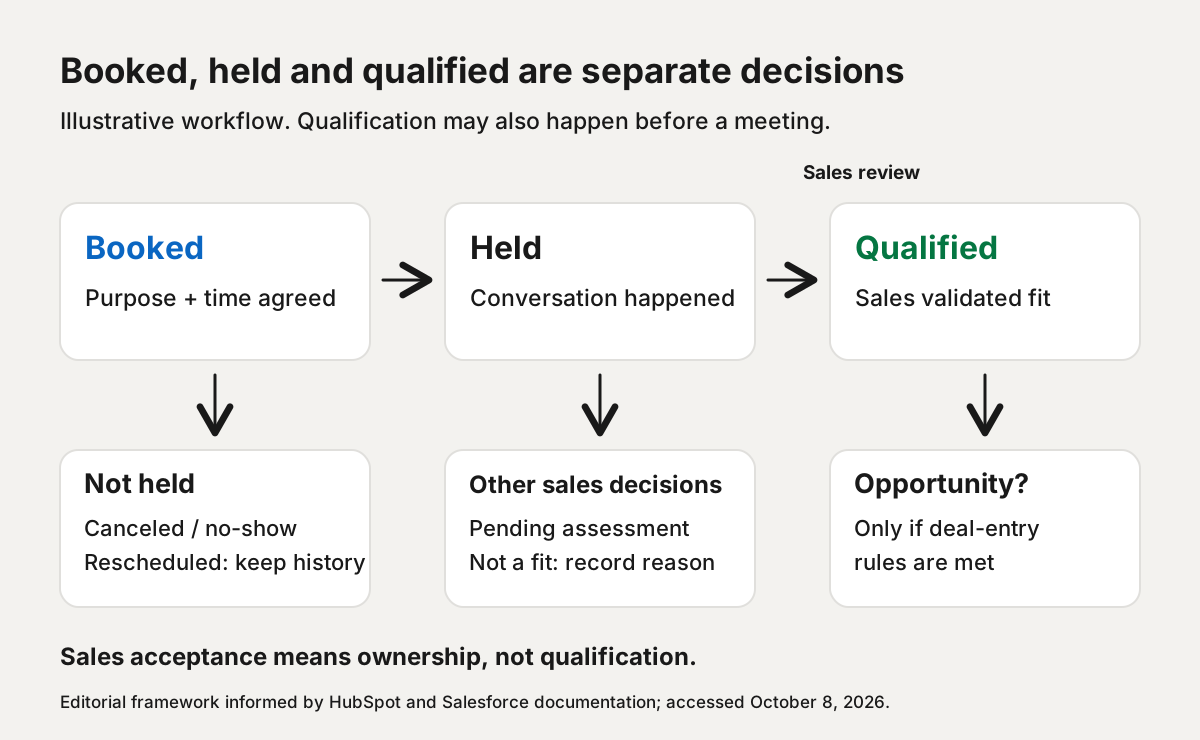
Qualification can happen before a meeting. The diagram shows post-call validation, not a rule that every prospect must follow that order. Preserve the qualification decision and its date even if the meeting later moves.
Use a handoff checklist, not a calendar notificationLink to this section
Complete this brief before handing responsibility to sales. Write “unknown” where evidence is missing. Do not turn a guess into a qualification tick.
| Handoff item | What sales needs | Proposed owner |
|---|---|---|
| Person and company | Role, company, relevant business context, existing CRM record and any duplicate to resolve | Outreach owner |
| Conversation origin | Relevant post or introduction, conversation dates and the reason for follow-up | Outreach owner |
| Prospect’s stated interest | A concise account of what they asked to explore, separated from your interpretation | Outreach owner |
| Fit evidence | Product use case, agreed ideal-customer criteria, exclusions and what is still unverified | Outreach owner; sales validates |
| Buying context | Known stakeholders, timing, constraints and unanswered questions, without assumed budget or authority | Outreach owner; sales validates |
| Meeting purpose | What the prospect expects, what was offered and any limits already explained | Outreach owner |
| Scheduling | Date, time zone, duration, joining details, attendees and correct calendar owner | Booking owner |
| Sales acceptance | Named recipient, acknowledgement, missing information and acceptance or return reason | Sales owner |
| After-call outcome | Held status, qualification decision, reason, opportunity link if warranted and next action | Sales owner |
| Feedback | Agreed changes to targeting, messages or routing, with an owner for each change | Sales and outreach owners |
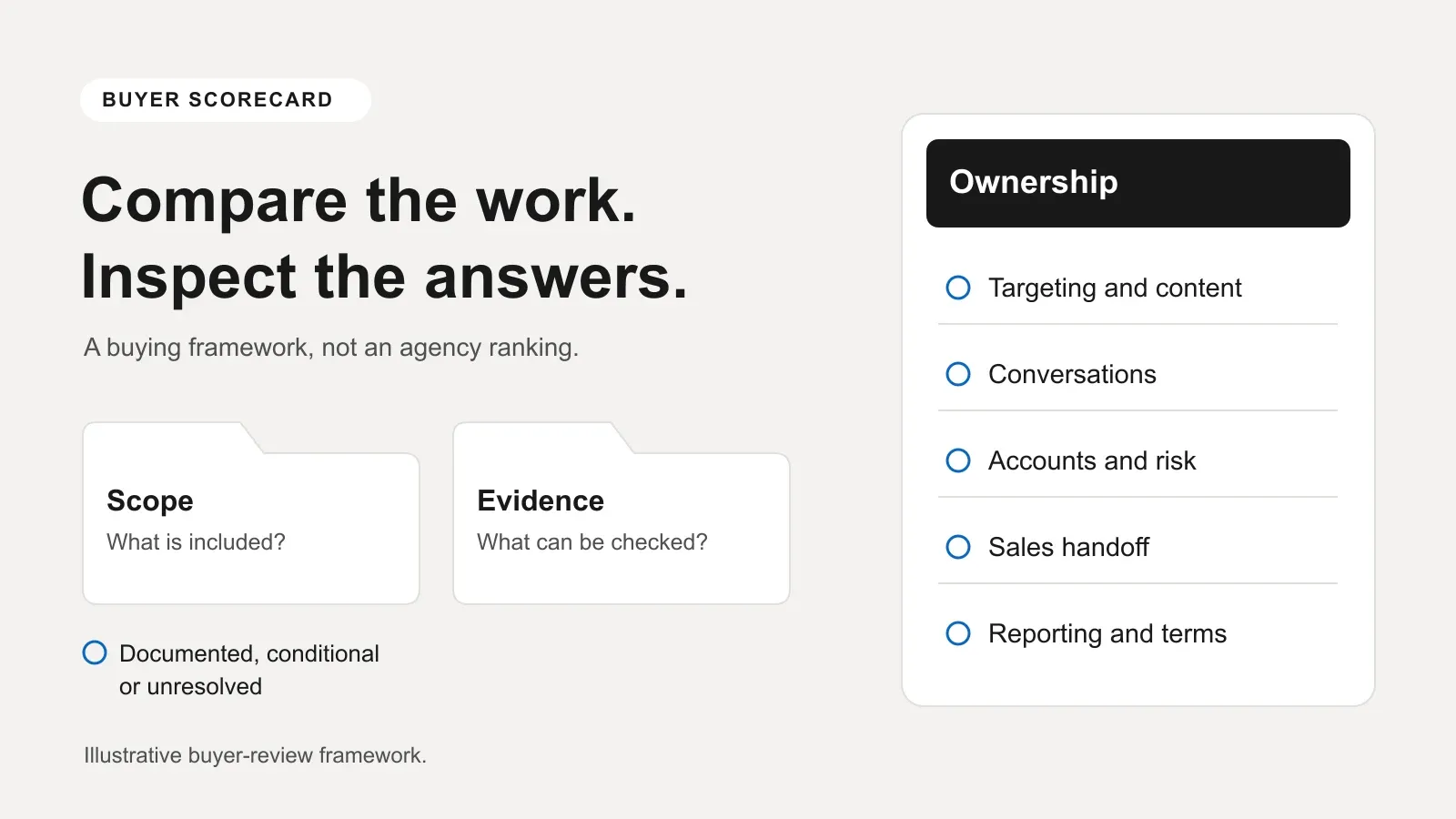
The ownership column is a starting point. A founder-led SaaS team may assign several roles to the same person. What matters is that responsibility is explicit rather than assumed to sit with “sales.”
Carry context without overstating intentLink to this section
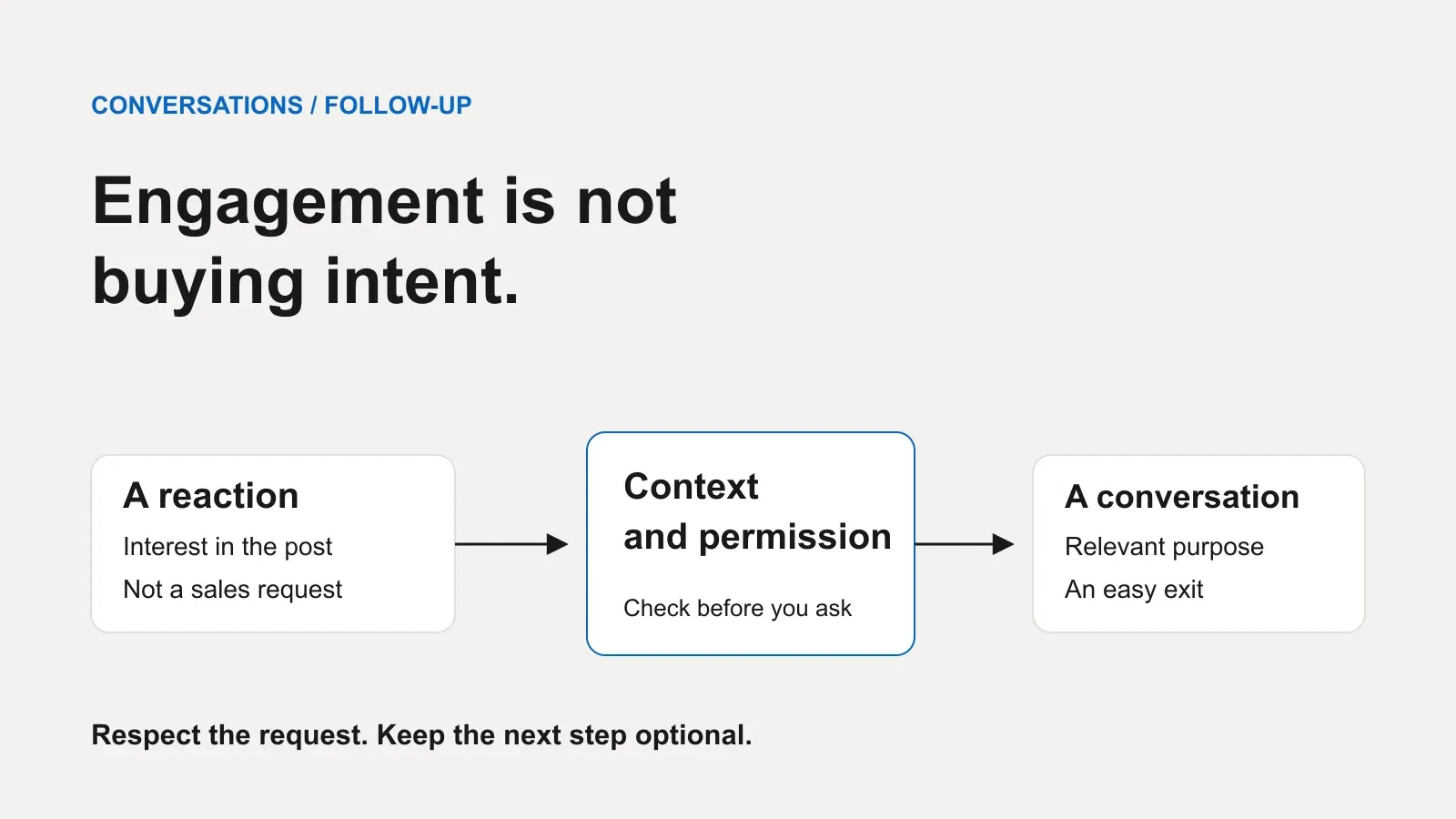
The brief should explain the transition from LinkedIn to a sales conversation. Was the person asking about a product use case, requesting a resource or agreeing to explore a business problem? Keep those meanings distinct.
For an illustrative fictional example, consider a revenue-operations manager who asks how a SaaS product handles duplicate account records. They agree to discuss that workflow. The handoff can state their question and meeting purpose. It should not claim they control the budget, need to replace their current system or intend to buy.
Use a short context summary plus the relevant conversation reference where appropriate. Avoid copying unrelated personal details into a sales brief. An illustrative fictional opening could be: “You asked about account deduplication; shall we start with the workflow you use today?”
If the conversation itself needs work, see our guide to moving from LinkedIn engagement to a sales conversation. The handoff should preserve the purpose established there, not introduce a different pitch.
Make qualification a decision with evidenceLink to this section
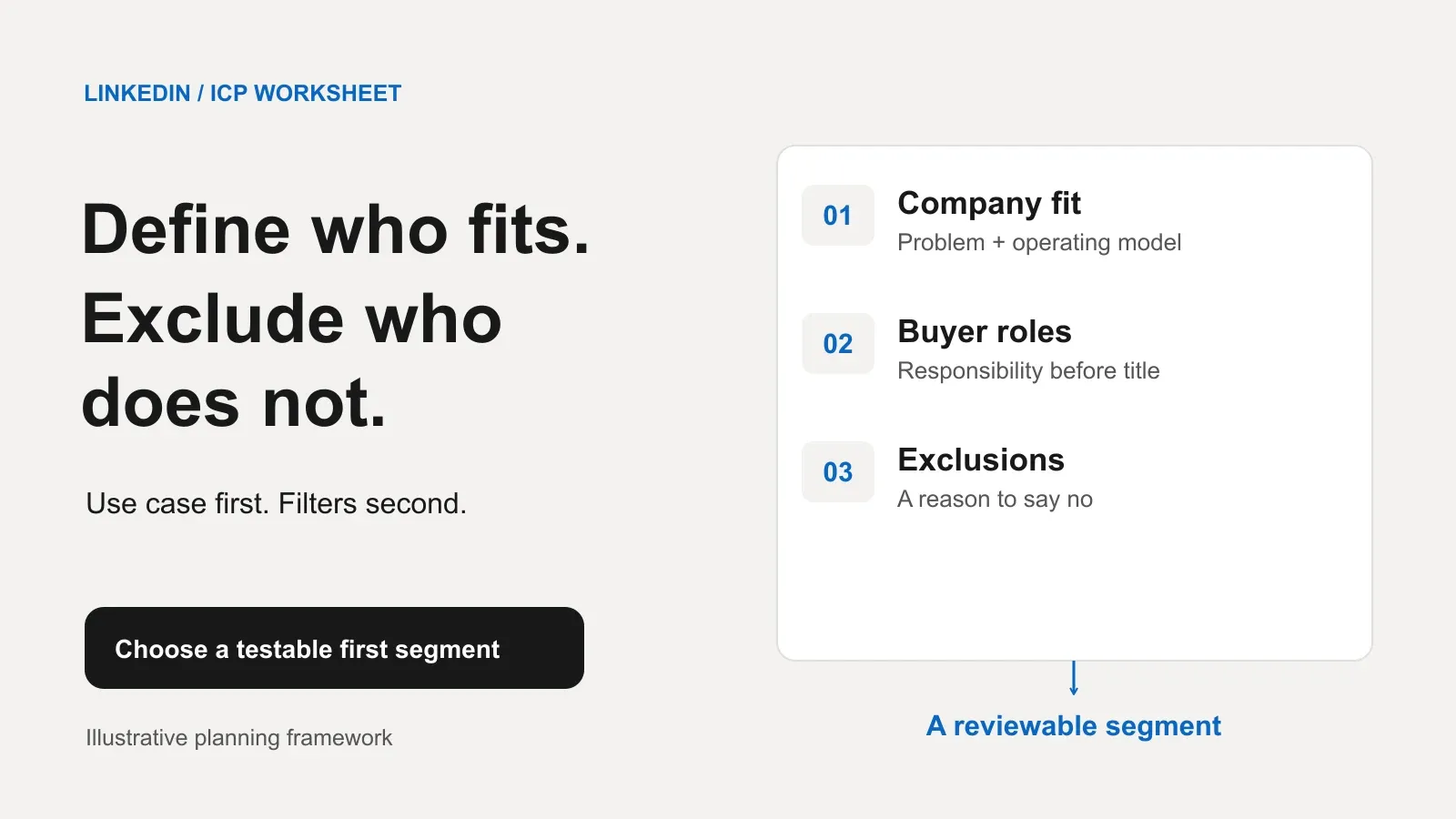
Agree on the minimum criteria before booking. For a B2B SaaS team, we suggest company fit, a relevant product use case, willingness to discuss it and enough context for sales to choose a sensible next step.
Distinguish “fits our target list” from “sales has qualified this potential customer.” Record who made each assessment. HubSpot’s separation of marketing-qualified and sales-qualified lifecycle stages is a useful example of that distinction[1].
Do not make every unknown a rejection. Missing procurement timing might belong in discovery; a company outside your supported market might be an exclusion. Put those rules in writing.
Allow sales to return a handoff with a concrete reason: wrong segment, mismatched purpose, missing context or existing deal ownership. Preserve that reason so the next brief can improve.
Check scheduling and ownership togetherLink to this section
Before treating a booking as ready, confirm that the prospect understands the topic, the sales representative has the brief, and the invitation names the right participants. Check time zones and joining details rather than assuming the calendar link resolved everything.
Choose a response expectation that fits your team, including a backup owner when the recipient is unavailable. This is a negotiated operating decision, not a universal response-time benchmark.
Agree who contacts the prospect after a cancellation or no-show, and who can arrange a new time. Keep a reschedule tied to the original meeting intent so moving an invitation does not create another prospect in the report. Maintain appointment history for operational review.
Avoid parallel follow-up. Once sales accepts the handoff, the outreach owner should know whether to stop, provide context or handle scheduling only.
Close the loop after the callLink to this section
Ask sales to record attendance, qualification, the reason for that decision and the next action. “Good call” is not enough. A useful note identifies the business problem, remaining fit questions and whether there is an agreed next step. If sales has not finished assessing fit, record a pending decision and its owner instead of forcing a yes or no. Give the outreach owner enough business context to learn from the outcome without making them responsible for sales’ qualification judgement.
Do not create an opportunity solely to make the handoff report look complete. Salesforce’s conversion documentation treats opportunity creation as a potential-deal decision, rather than an inevitable consequence of converting a lead[3].
Review outcome reasons together. A missing buyer role suggests a question for targeting; an unclear purpose suggests reviewing the invitation. Treat these as hypotheses to investigate, not proof that a single message caused the outcome.
Keep reporting definitions stable and document changes. For the wider process, use our B2B SaaS LinkedIn lead-generation guide alongside the checklist.
If you want to discuss how a LinkedIn programme would hand conversations to your sales team, you can book a call with us. Bring your qualification criteria and current handoff process so we can discuss the responsibilities.