From LinkedIn Engagement to a Relevant SaaS Conversation
Distinguish LinkedIn engagement from buying intent, choose a contextual response, and use permission and an easy exit before moving toward a SaaS sales conversation.

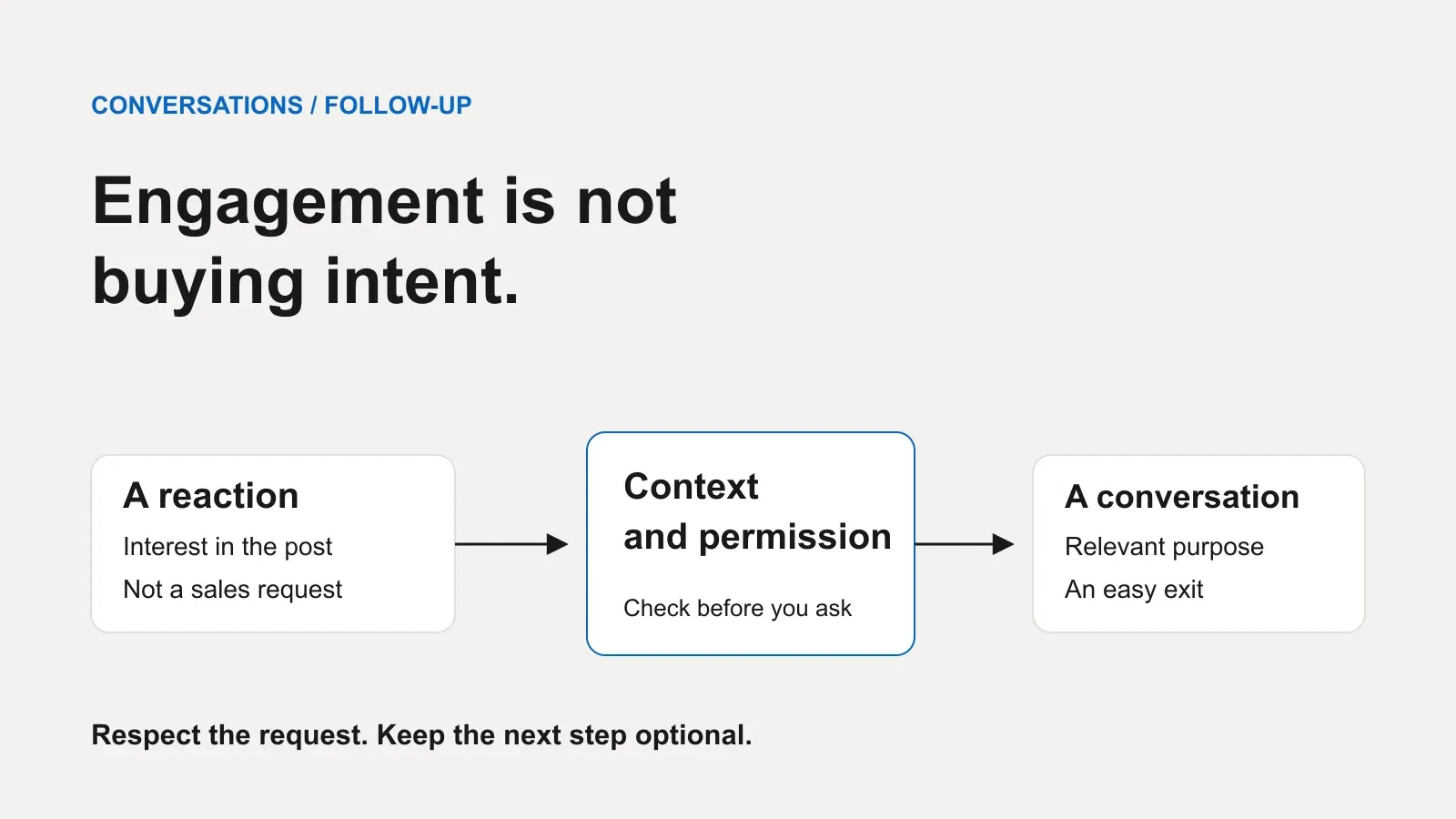
LinkedIn engagement follow up should begin with what a person actually did or said, not the sales outcome you want. A reaction is engagement. A description of a relevant problem gives context. An explicit request to discuss that problem gives a reason to consider a conversation. Keep those distinct.
Our recommendation is to respond proportionately, ask before changing the purpose of the exchange and make declining easy. Sometimes the right response is a public answer. Sometimes it is no follow-up at all. This is a decision framework, not a sequence with a promised response rate.
Separate the observed signal from your inferenceLink to this section
Use the person’s words as your starting point. Avoid creating a qualification status from behavior that does not establish it.
| What you observed | What it establishes | What it does not establish | Our recommended response |
|---|---|---|---|
| A reaction or a brief compliment | Engagement with the post. | A relevant problem, budget or wish to receive a pitch. | Leave it there unless there is meaningful additional context. |
| A substantive question in a comment | Interest in that question. | Interest in your product or in a private message. | Answer publicly where appropriate. |
| A request for a resource | A request for that resource. | Permission for a sales sequence. | Deliver the requested material without adding a meeting condition. |
| A description of a current problem | Context that may be relevant. | Product fit, purchase timing or decision authority. | Clarify whether more help would be useful. |
| An explicit request to discuss fit | Interest in a defined conversation. | A qualified opportunity or a purchase commitment. | Agree the purpose and relevant participants. |
This table defines our working categories; it is not a claim about how every LinkedIn member behaves. An accepted connection also should not be recorded as buying intent.
If the original content has no clear connection to your SaaS use case, do not invent one in the message. Start upstream with the audience and topic in the LinkedIn lead-generation guide for B2B SaaS.
Why research does not establish permissionLink to this section
The 2024 Edelman–LinkedIn report asked about receptiveness to outreach from organizations publishing high-quality thought leadership. Its method was an online survey of 3,484 executives through LinkedIn, in English, across the US, Canada, UK, Germany, Singapore, Australia and India, fielded November 30–December 14, 2023.[9]
This is broad B2B attitude research, not a SaaS messaging experiment. A survey response cannot authorize outreach to a particular person. Use research to inform the value of your content, not to override the context or boundaries of an individual exchange.
Choose a response before drafting a messageLink to this section
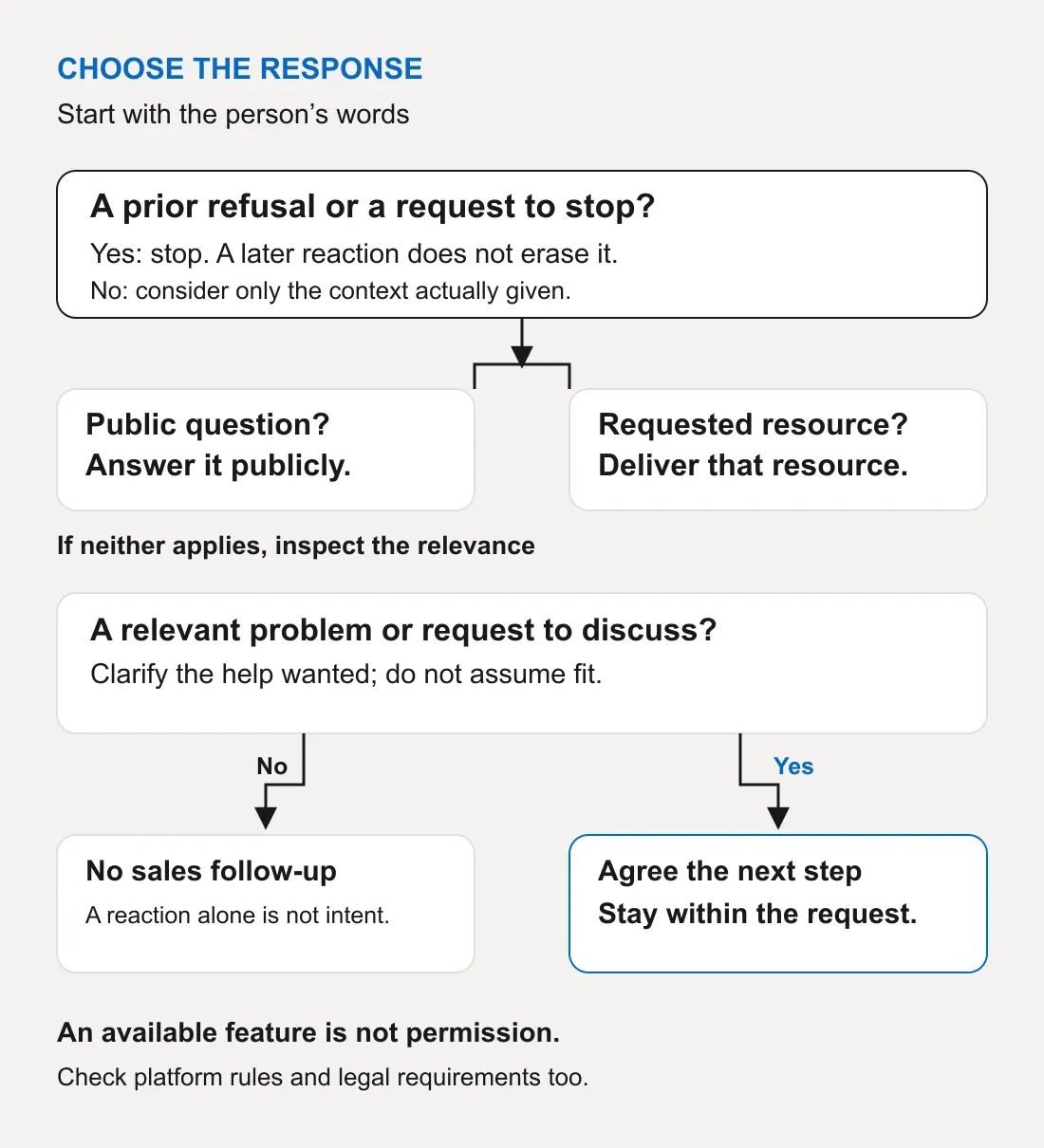
First check for a prior refusal, an opt-out or a request to keep the discussion public. Those boundaries take priority over the latest reaction. A later like should not be used to erase an earlier request to stop.
Then identify the smallest useful response. Answer the question that was asked. Deliver the material that was requested. Do not attach an unrelated pitch because there is an opening to speak.
If a relevant problem emerges, ask whether the person wants to explore it. That request should be specific enough to decline. “Would it help to compare the handoff responsibilities?” explains the purpose more clearly than “Can I pick your brain?”
What LinkedIn’s rules do not allowLink to this section
LinkedIn’s Professional Community Policies prohibit irrelevant, untargeted or unauthorized messages, as well as clearly unwelcome messages, improper sales pitches and needlessly repetitive messaging. They also bar using connection invitations to promote something to unfamiliar people or to spam.[1] Its spam guidance specifically includes excessive, irrelevant or repetitive comments and messages.[2]
These rules apply to the substance and context of the interaction. Adding a person’s name or “no pressure” does not turn an unwanted pitch into a relevant exchange.
LinkedIn’s messaging help describes messaging first-degree connections and certain routes to non-connections, including InMail. It also says members cannot message people who have blocked them.[3] A feature being available does not establish that your proposed message is wanted. Do not use invitations, another sender or a different channel to get around a refusal.
Ask for a defined next step, not blanket permissionLink to this section
LinkedIn’s InMail guidance recommends being brief, explaining the goal and mentioning the profile content that prompted the message.[4] We extend that writing principle into this editorial checklist:
- Refer to the actual topic, without pretending you know the person’s situation.
- Identify who you are and any commercial relationship relevant to the offer.
- Offer a useful action connected to the question.
- Ask whether that specific action would help.
- Leave room to decline without an explanation.
A yes to a worksheet is a yes to a worksheet. It is not an agreement to a call, off-platform contact or continuing promotional messages. If the requested action changes, ask again rather than expanding the original request yourself.
Fictional wording, not a live exchange: “Your question about stalled approvals made the ownership issue clearer. I work with Alderloop, a workflow SaaS company. Would its handoff worksheet be useful here? If not, I’ll leave it there.”
Use such wording only where the surrounding context makes the offer appropriate. The phrasing itself does not establish platform permission or resolve applicable legal requirements.
A fictional DM thread with an easy exitLink to this section
The illustration follows a fictional public comment about handoff ownership, followed by an explicit request to continue privately. Mara Vale, Theo Nerin, Alderloop and Fenwick Relay are all fictional. Neither the people nor the companies represent customers or real LinkedIn accounts.
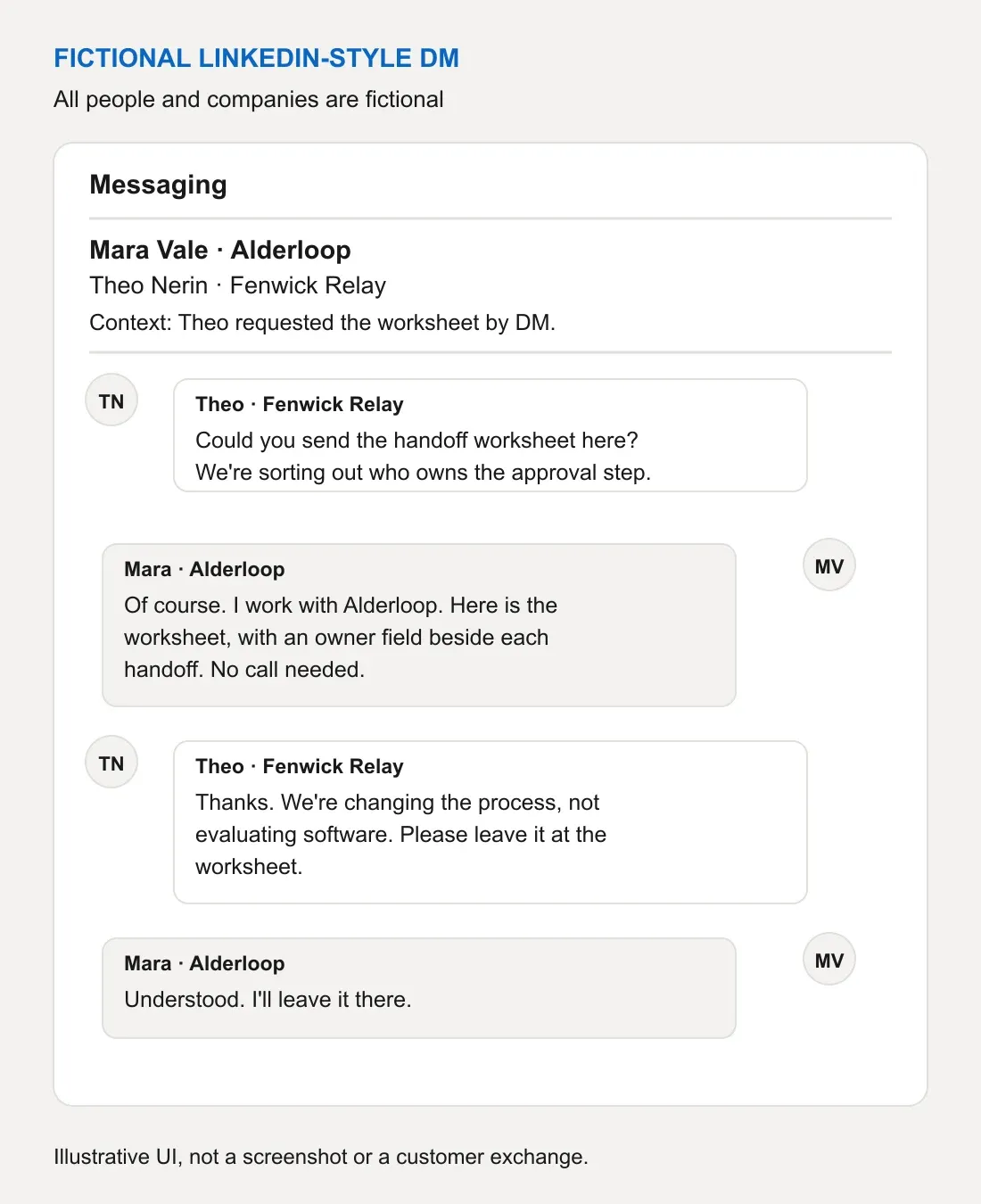
The thread reads:
Theo: Could you send the handoff worksheet here? We’re sorting out who owns the approval step.
Mara: Of course. I work with Alderloop. Here is the worksheet, with an owner field beside each handoff. No call needed.
Theo: Thanks. We’re changing the process, not evaluating software. Please leave it at the worksheet.
Mara: Understood. I’ll leave it there.
The useful action is delivering the requested material. The exchange does not need a booking to be handled well. The reader’s clarification narrows the scope, and the sender respects it rather than treating the reply as another opening.
Handle the reply, including silenceLink to this section
If someone wants an explanation, answer it. If they ask about product fit, check the relevant use case and constraints without treating the conversation as already qualified.
If they decline, acknowledge it briefly if appropriate and stop. LinkedIn’s sales-messaging note says not to send promotional or sales messages to recipients who have declined an earlier InMail or otherwise indicated they do not want more messages.[5]
If they do not answer, do not interpret silence as permission to continue. Our default for this engagement-led framework is to stop rather than send repeated reminders. If someone explicitly asks you to return to a question later, record that request and its scope instead of inventing a universal cadence.
Keep the boundary available to everyone involved in outreach. Record the minimal operational note needed to honor it, restrict access and review retention with the responsible owner. Do not collect unrelated personal information to make the follow-up feel more tailored.
Keep legal and account questions separate from toneLink to this section
LinkedIn notes that unsolicited sales messages may be subject to legal requirements and recommends consulting counsel.[5] In the Canadian guidance checked on October 8, 2026, the CRTC includes LinkedIn messages within its discussion of electronic addresses under Canada’s Anti-Spam Legislation.[7] Its consent guidance also warns that an electronic message requesting express consent is itself a commercial electronic message. It says obtaining express consent by email requires existing implied consent to send that message.[8]
The legal summary here describes regulator guidance, not advice for a particular campaign. Get qualified advice about applicability, consent, identification, opt-out requirements and exceptions before outreach. Asking “may I send this?” is not a complete legal assessment.
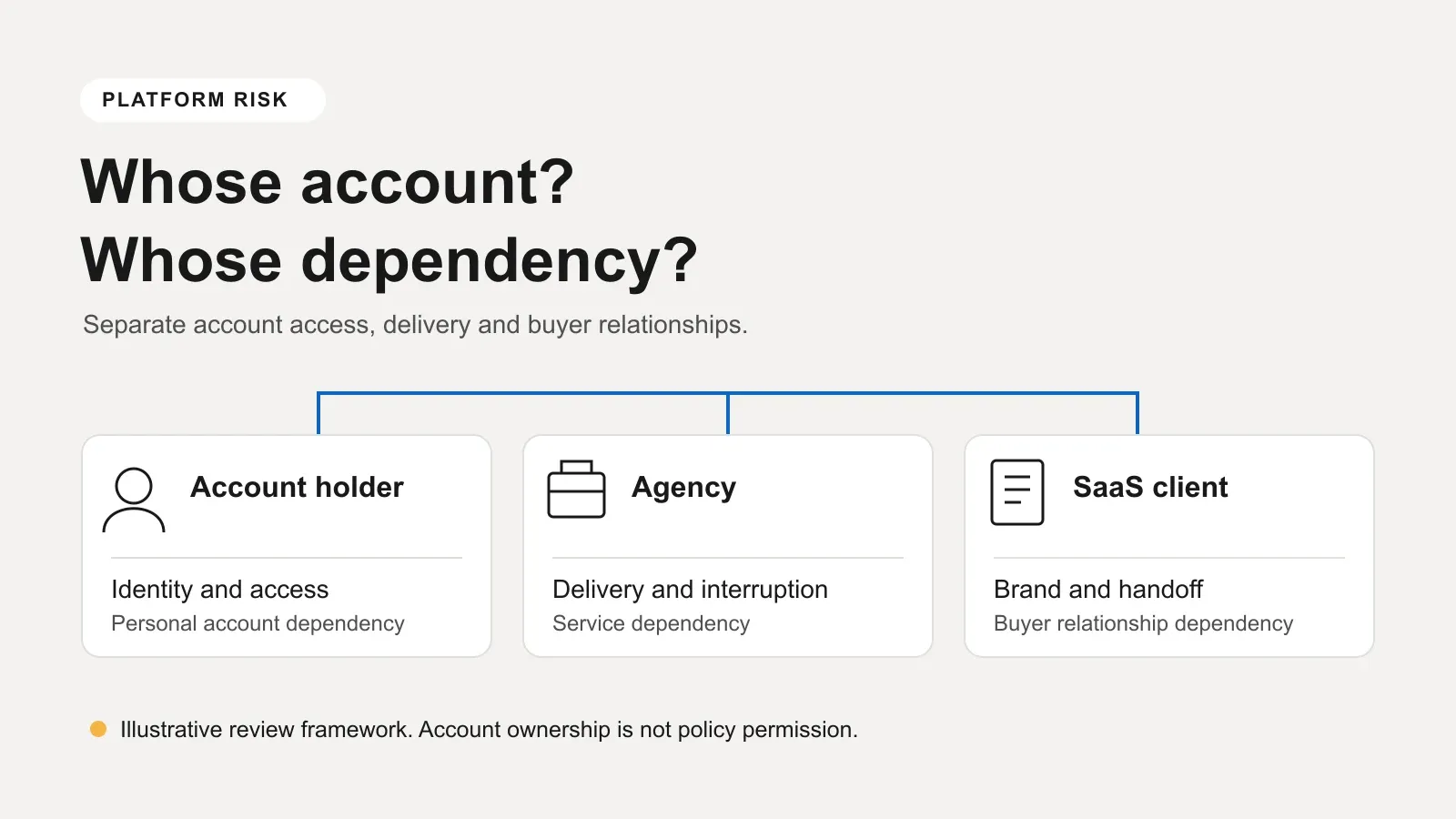
LinkedIn prohibits third-party software that automates activity on its website and warns that using prohibited tools can lead to account restriction or closure.[6] This framework does not recommend automation tools, daily sending limits or ways around restrictions.
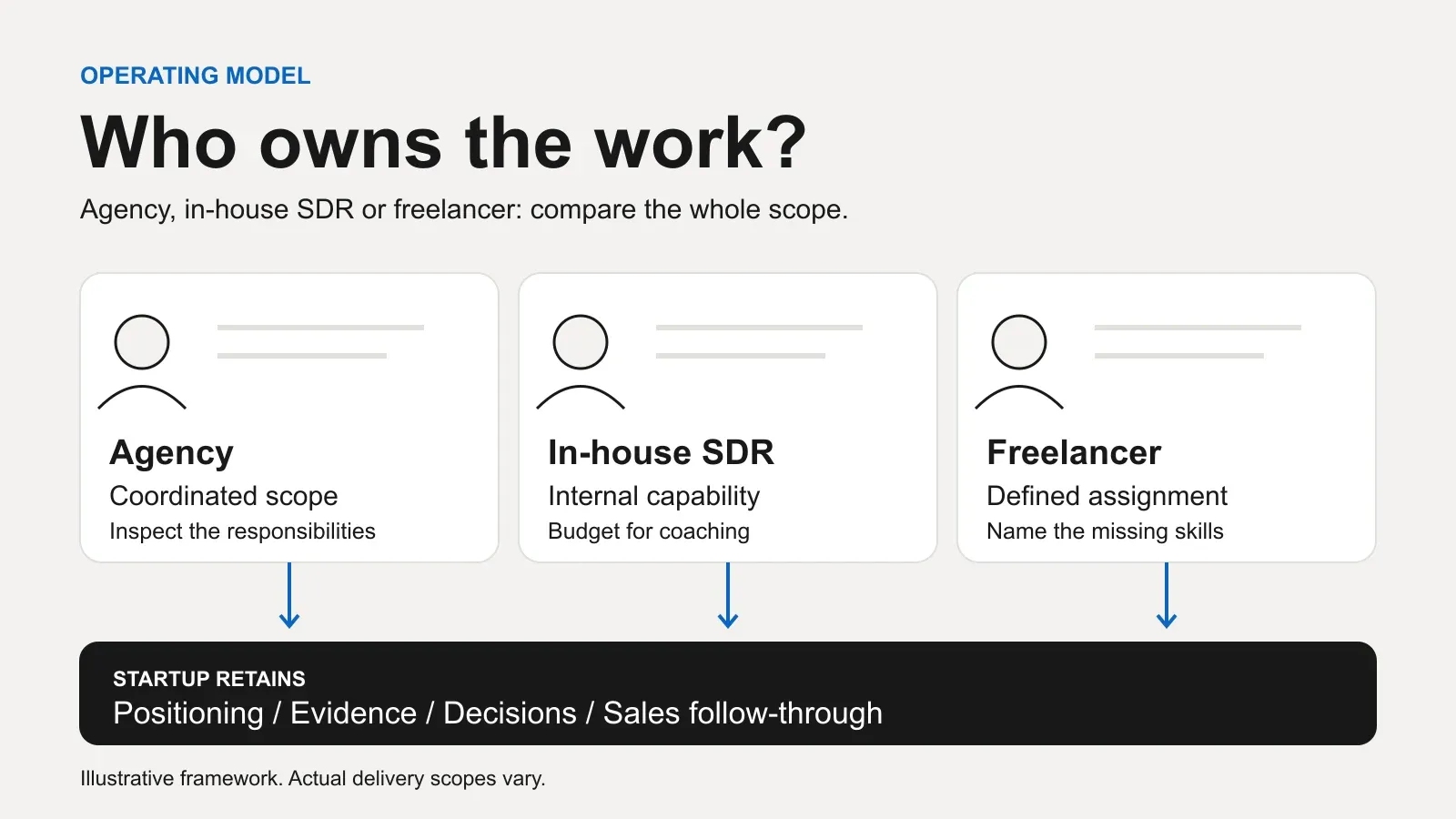
At Sapps Leadgen, we use our own LinkedIn accounts, not a client’s personal account. That identifies where account disruption would arise; it does not establish permission for any operating practice. As an operational risk, consider client campaign continuity and reputation too. A company using its people’s accounts exposes those accounts instead. Review the operating model separately from message wording.
Make a conversation useful before handing it to salesLink to this section
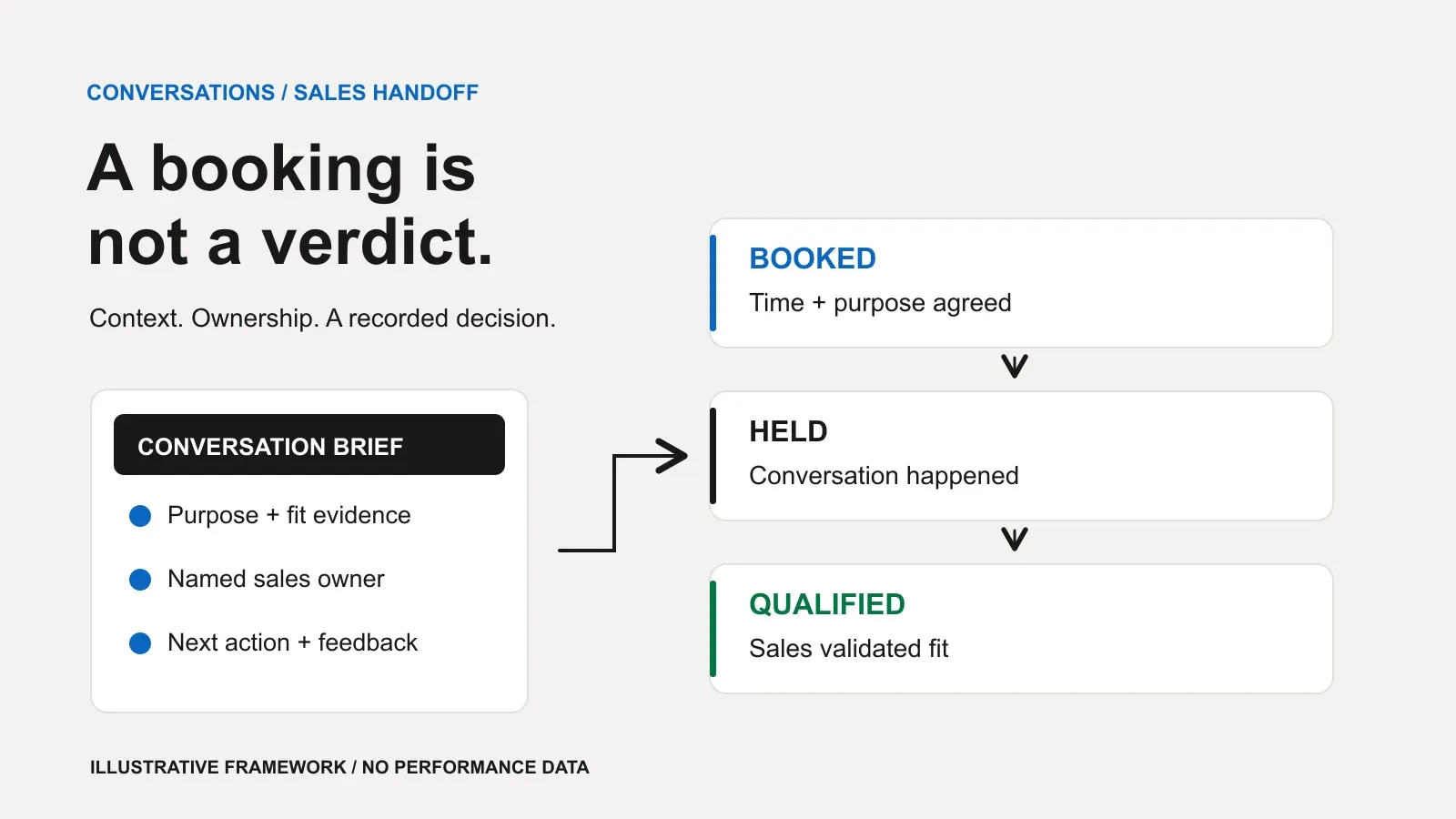
When someone wants to speak, agree what the conversation is for. Confirm the problem they described, the relevant product boundary, who should join and whether a meeting is the next step they want.
Pass along their stated context and request, not a label such as “high intent” derived from reactions. Record unknowns as unknowns. The LinkedIn-to-sales handoff checklist helps distinguish a booked meeting from a qualified opportunity.
Before sending, check the original interaction, any prior boundary, the proposed response and the commercial context. If you cannot explain why the next step is relevant to the person’s own words, leave it unsent.
If you want to discuss the boundaries between content engagement, follow-up and sales handoff for your SaaS, book a call with us. We can review the workflow and the questions it needs to answer.
Sources
- LinkedIn Professional Community Policies
- Spam
- Send messages on LinkedIn
- Writing InMail Messages - Best Practices
- CAN-SPAM & CASL
- Prohibited software and extensions
- Frequently Asked Questions about Canada's Anti-Spam Legislation
- From Canada's Anti-Spam Legislation (CASL) Guidance on Implied Consent
- 2024 Edelman–LinkedIn B2B Thought Leadership Impact Report